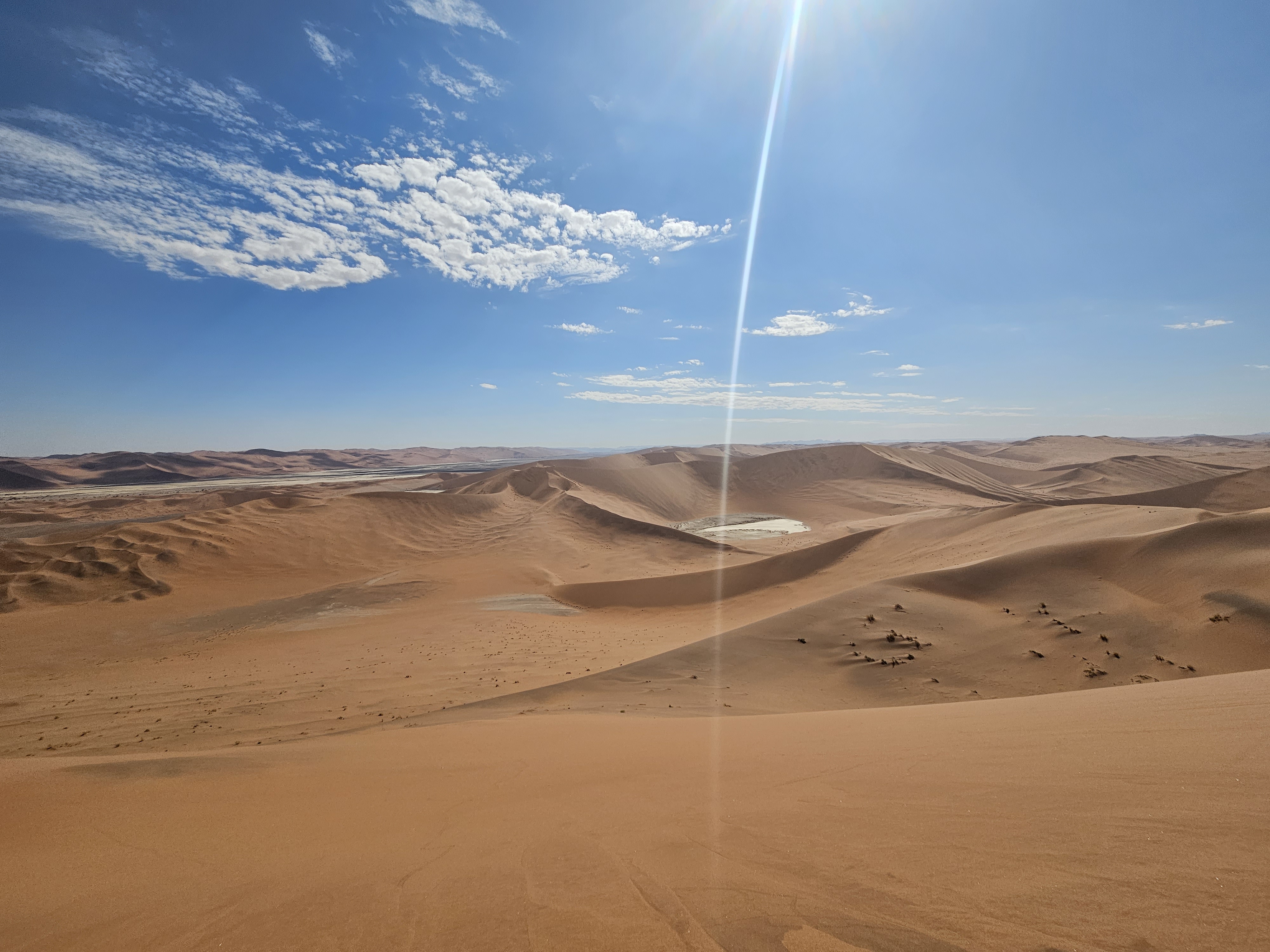
While procrastination is usually a human tendency better avoided, sometimes the passage of time gives you additional perspective. Regardless, I find myself writing this entry almost four months after the trip ended.
I originally had a trip tentatively planned to Egypt with a friend for this time frame, but uncertaintly resulting from increasing tensions in Palestine caused us to cancel the trip. After a few more months, it seemed that tensions were easing again and I decided to go it alone to Oman. I squeezed in this trip of about 8 or 9 days between Christmas and the first few days of the New Year. Enough to make the trip worthwhile, but shorter than I would have liked. About midway through my trip, the news started to report rising tensions with Iran. I began feeling uneasy at this point, though I was not so much concerned about personal safety as I was worried about the possible outbreak of hostilities delaying my return home. In practice, hostilities did not start until two months later and the only delay in my return home was a weather related delay that left me semi-stranded for two nights near the Munich airport in a hotel where nearly every language was spoken except German. This would not have been so bad except that 1) the weather delay was related to a snowstorm that affected Munich 2) I had packed for hot, dry, desert conditions and had no cold weather clothes, and 3) I was there on a Sunday when nearly everything was closed.
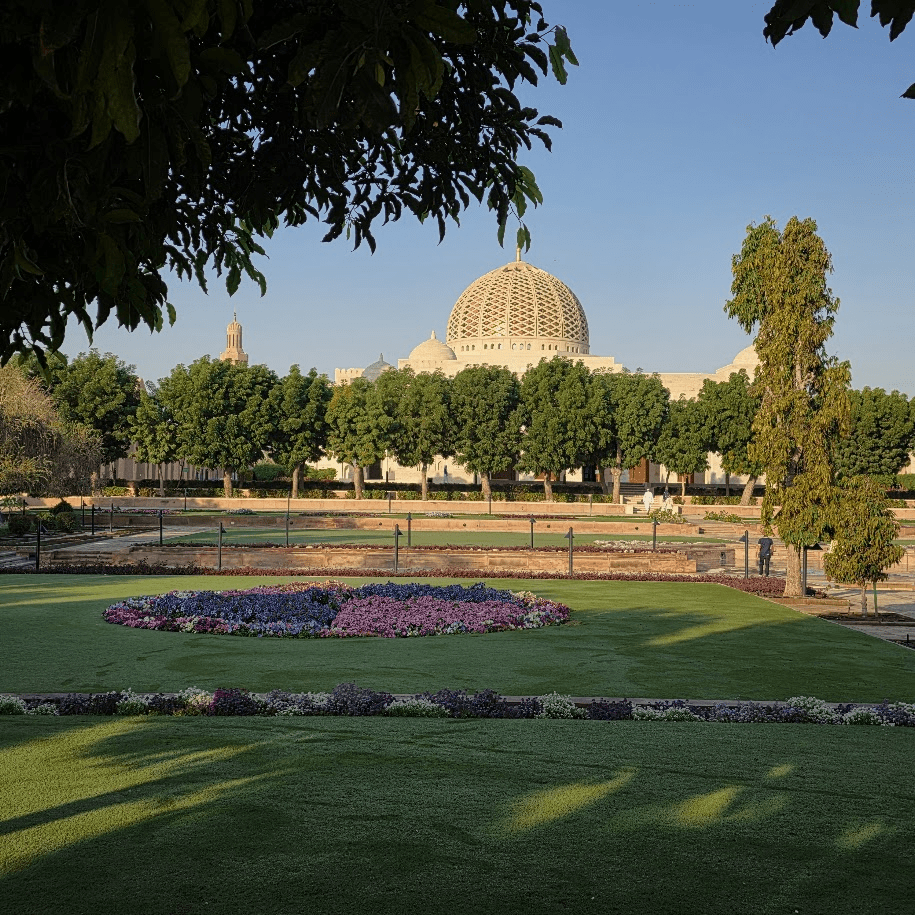
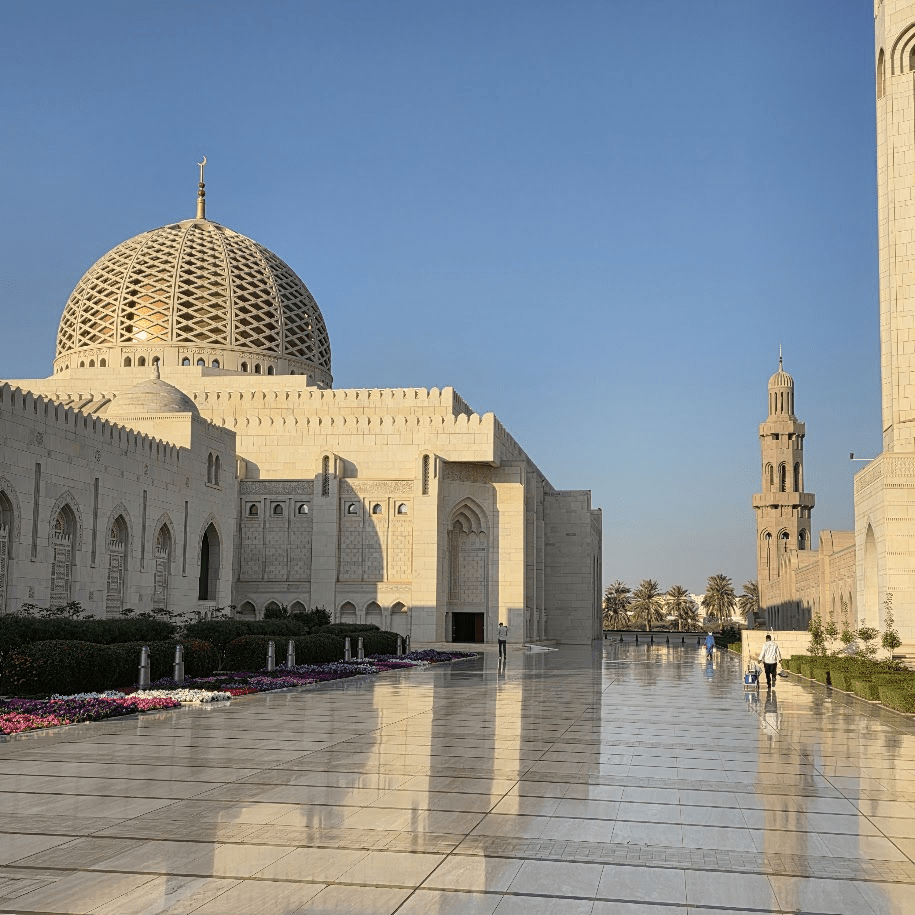
Despite the current tensions and violence, my stay in Oman was tranquil. My trip was confined to Muscat and a few locations that are accessible from Muscat via a day trip. This was partly due to time, and partly because during December the weather is reportedly lousy in Salalah, the main other location I was interested in visiting. The Sultan Grand Qaboos Mosque was one of my high-priority sights. It is not terribly old, completed in the early 2000s by the previous Sultan, but is one of the most beautiful mosques in the world.
The Royal Opera House, in my opinion, is in need of some better signage, as it is a large complex and it took me a bit to figure out where the opera house proper is. In the process of finding it, I explored some arts and cultural exhibits, such as these instruments made of silver owned by the late and beloved Sultan Qaboos.
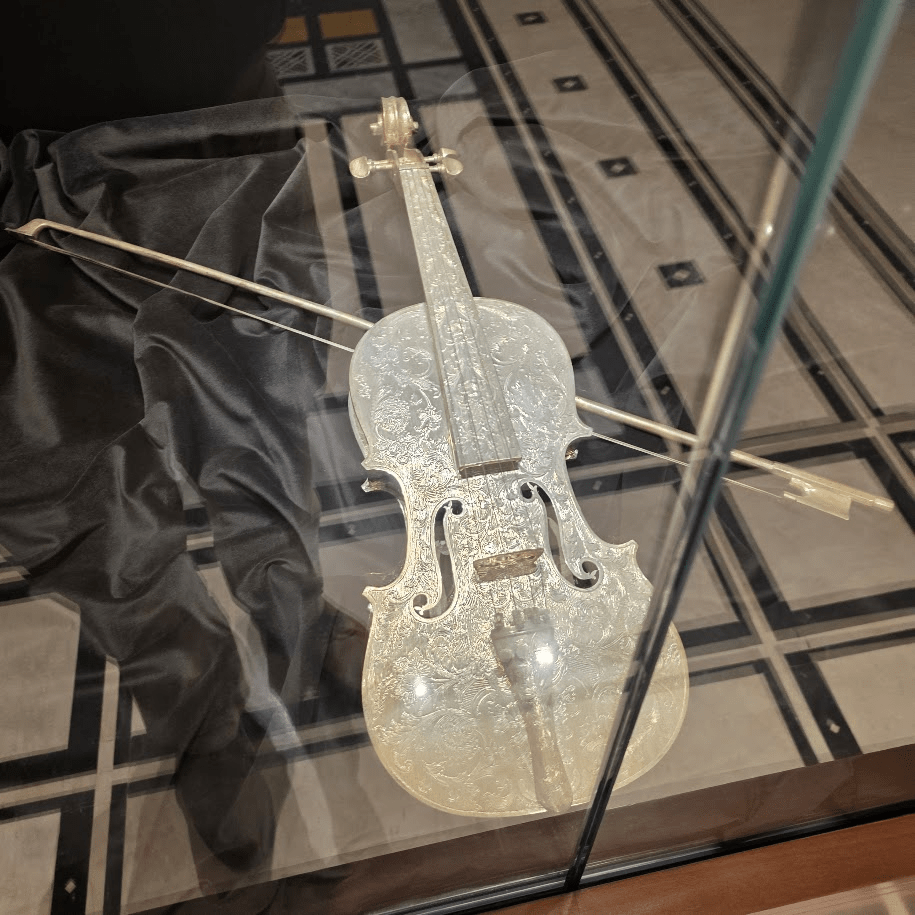
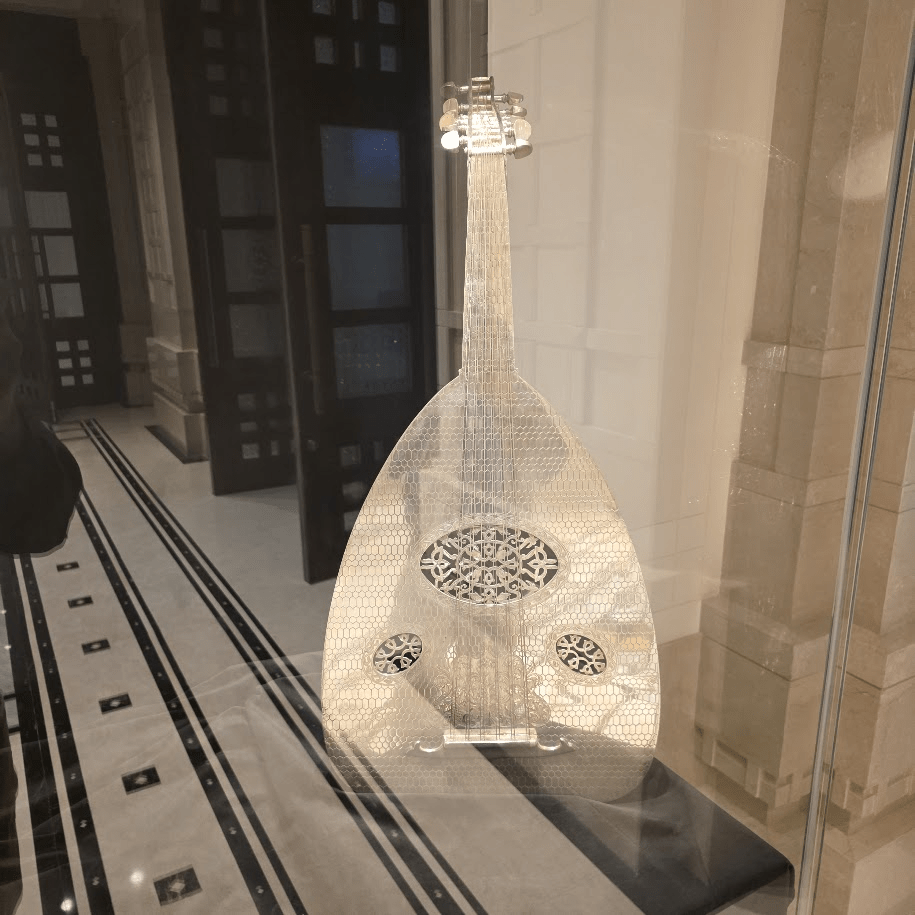
As a former hobby stringed-instrument maker, I am skeptical the acoustic properties of these give them a desirable tone, but I think that is not the point.
The inside of the theater itself is lovely, but it is only accessible via a guided tour. The tours lasts only a few minutes (I don’t remember exactly, but less than half and hour), and I spent longer waiting for the tour to start than the tour lasted. I think it was about 3 and a half Omani rials, or about $7.
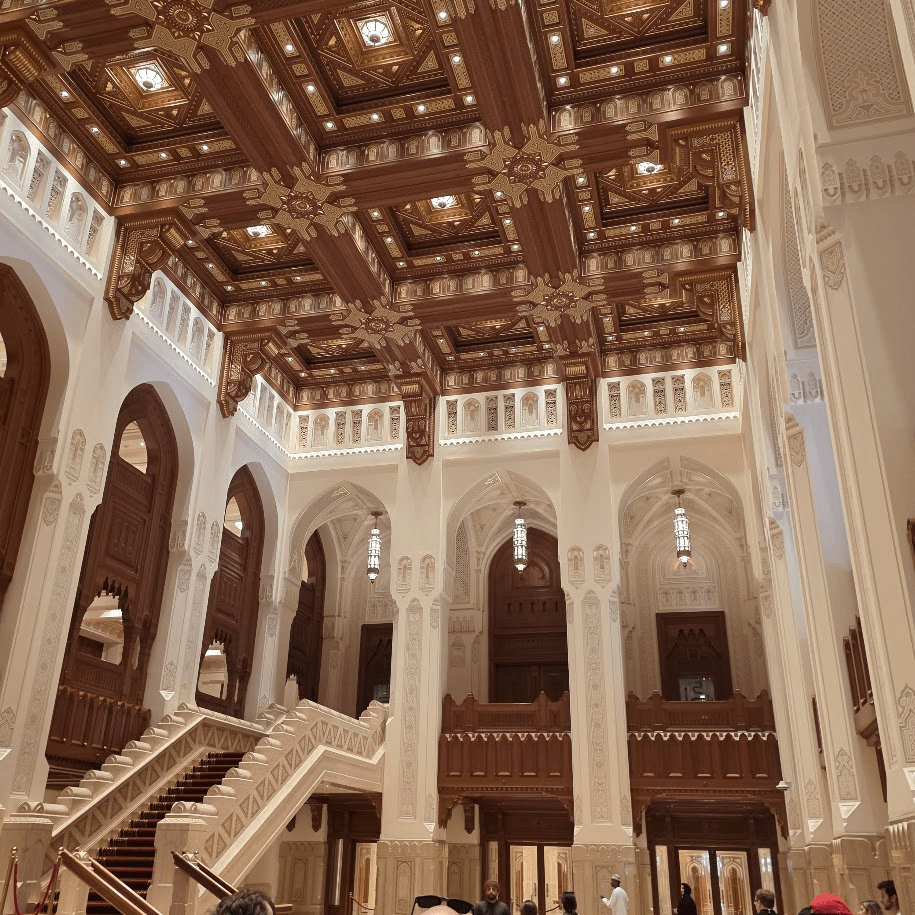
In Muscat, I also visited the National Museum, Bayt Al Zubair, and Fort Al Marani, all of which are worthwhile. Visiting the suqs (Arab open air markets) is an often recommended experience. I had this experience on a visit to Tunisia years before, and because I was not interested in acquiring much in the way of souvenirs (and did not have space in my luggage), other than breezing through a market in Nizwa, I decided to pass on this.
A logistical factor to keep in mind is that Muscat is not walkable at all. It sprawls for miles along the coast, and the areas with sights of interest to tourists are scattered along the length of city in pockets. Each pocket may be walkable to a degree, but traversing the city as a whole requires renting a car, public transportation, or using taxi cabs. I do not like driving in foreign countries, and Omanis have a reputation as aggressive drivers. Reading in advance of my trip indicated that public transportation was not reliable, so I relied on taxis for most of my movements around Muscat.
This decision required me to come face to face with Oman’s most unusual wonder: its taxi drivers. Overall, I found Omanis very polite, friendly, and hospitable. Omani taxi drivers are a breed apart. The implementation of mobile apps for calling and paying taxis mostly controls outright scamming (though the odd driver will still try). They are not rude or unfriendly, rather their overwhelming curiosity leads them to ask a lot of questions that across cultural boundaries seem out of place or uncomfortable. Combine this with some insane driving habits, and each taxi ride has about a 50/50 chance of being an adventure in itself. Most speak somewhere between no English and just enough English to get you to your destination and get paid. I speak a functional level of Modern Standard Arabic. I had a couple conversations that involved navigating confusion about how a bearded, Arabic-speaking westerner could be non-Muslim and yet still interested in visiting a mosque (even if that mosque doubles as one of the main tourist attractions in the city) for a reason other than to pray. There is, however, no ill-intent in any of it.
A fairly typical Omani meal seems to include a meat (either beef/lamb, chicken, and less commonly fish), rice or bread, and some vegetables. This is a meal along those lines called I think Quelliyah, if I remember correctly, from a cafe near my hotel.
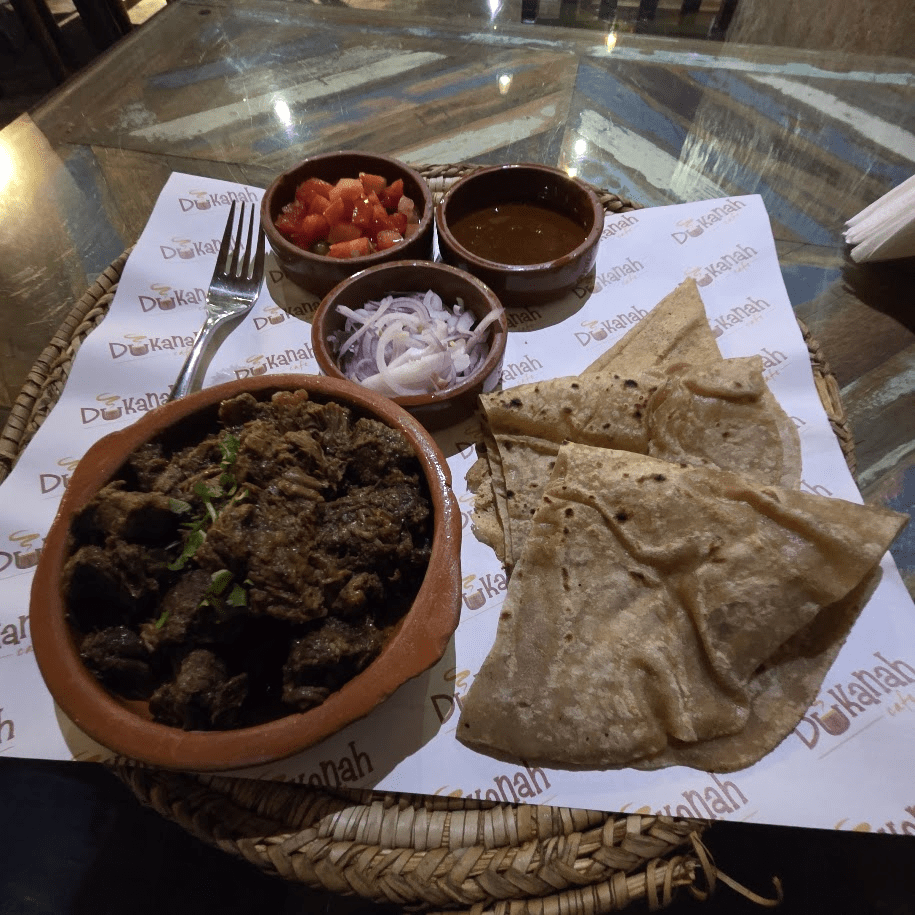
Omanis eat with their hands. Even dishes such as rice, where this would seem to be highly illogical and inefficient. This takes some getting used to for Westerners. Westerners eat with knives, forks, and spoons. This takes some getting used to for Omanis, and I would assume other Arab peoples. I could not help but notice on my first day trip to Nizwa, the Omani guides ate with us, but seemed only slightly amused by out requests for silverware. On the second tour to Wadi Shab, the Omani guides chose not to eat with the group. I was never clear if this was because: they weren’t hungry; they were tired of the tour group staring at them like they were barbarians for eating with their hands; or they were tired of watching a bunch of barbarians touching their food with their left hands. If you don’t understand the left hand thing, Google is your friend.
I enjoyed Omani food, but did get a little tired of it by the end of the week. There was a rose petal drink I absolutely loved. There are plenty of international restaurants if you want to mix it up.
Outside of Muscat, I took days trips to Nizwa, where the main attractions are the fort and the suqs.
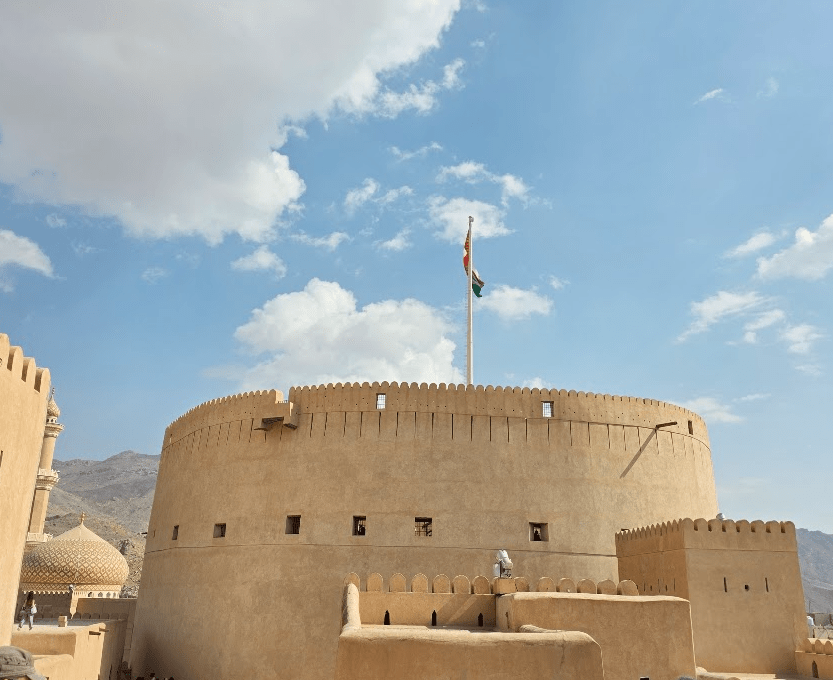
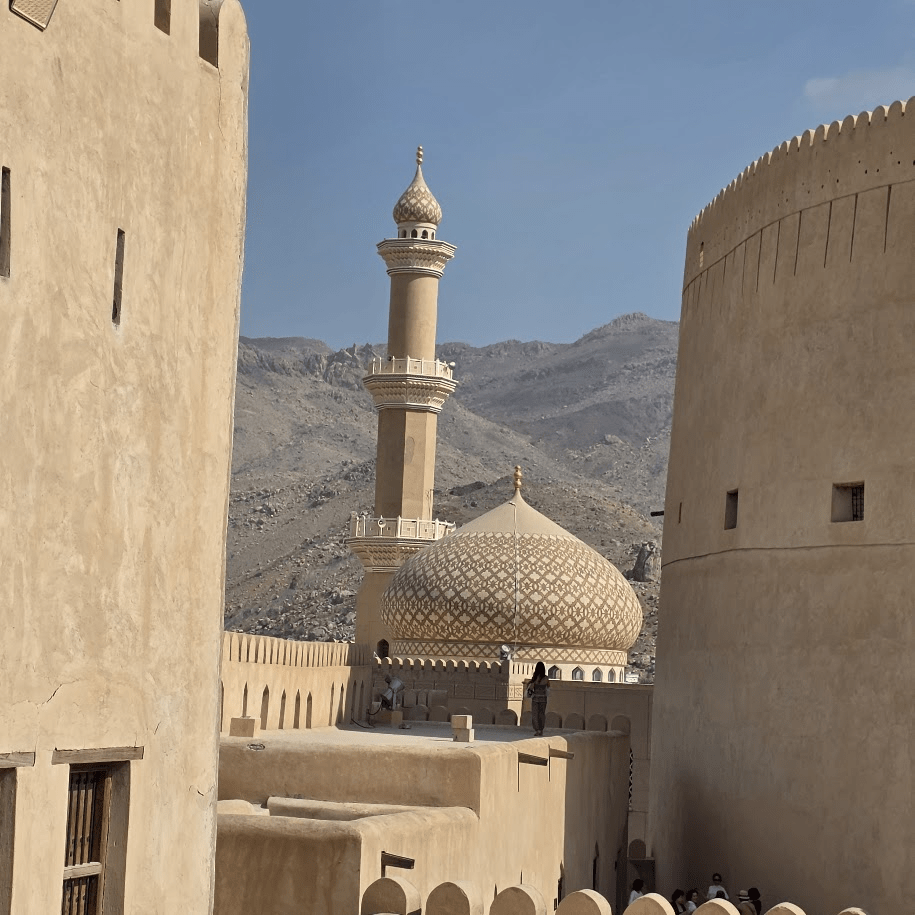
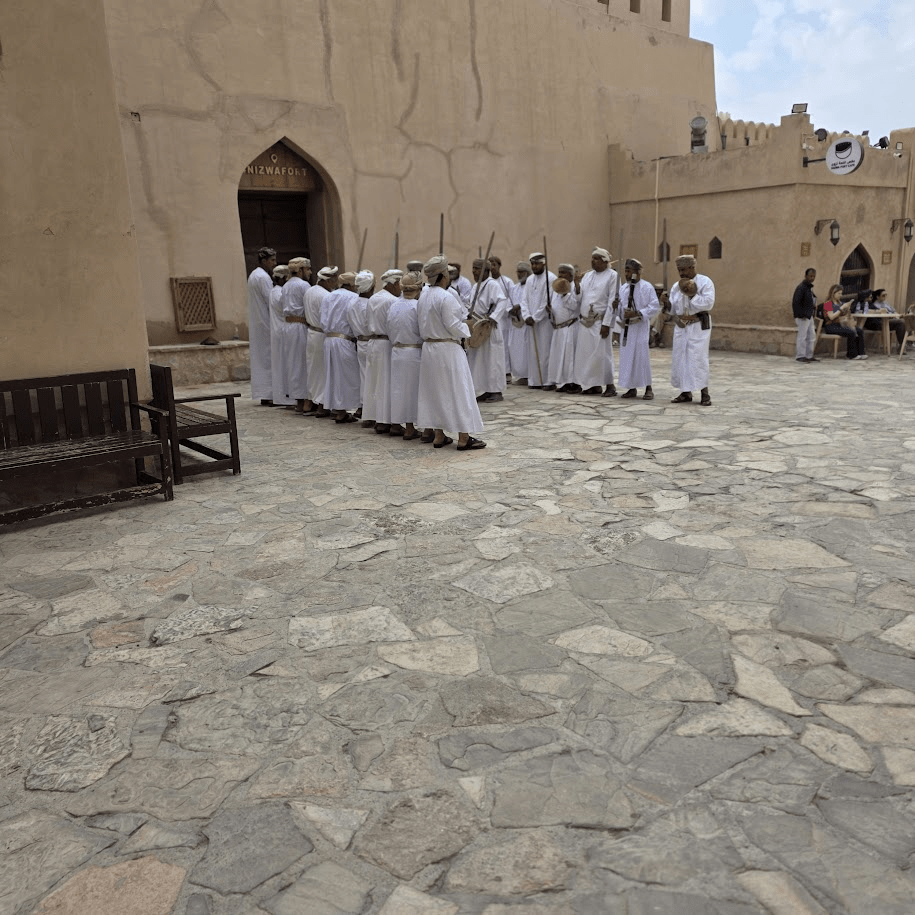
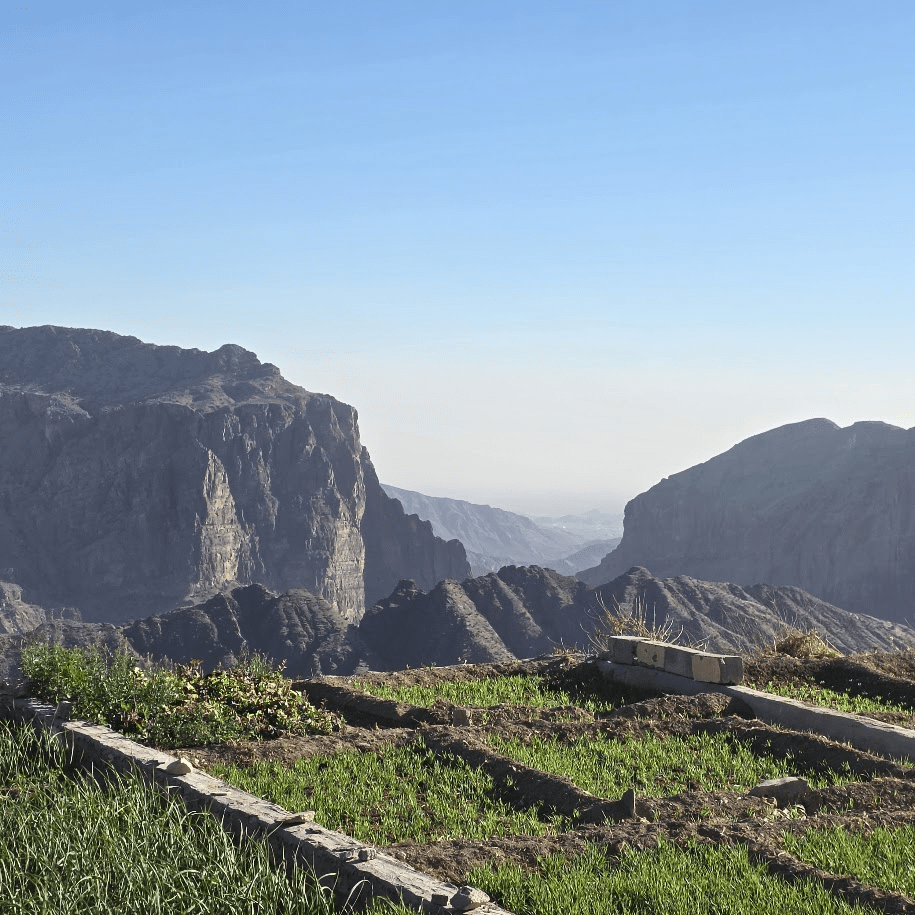
We also stopped in Jebel Akhdar (Green Mountain) mostly for the lovely views.
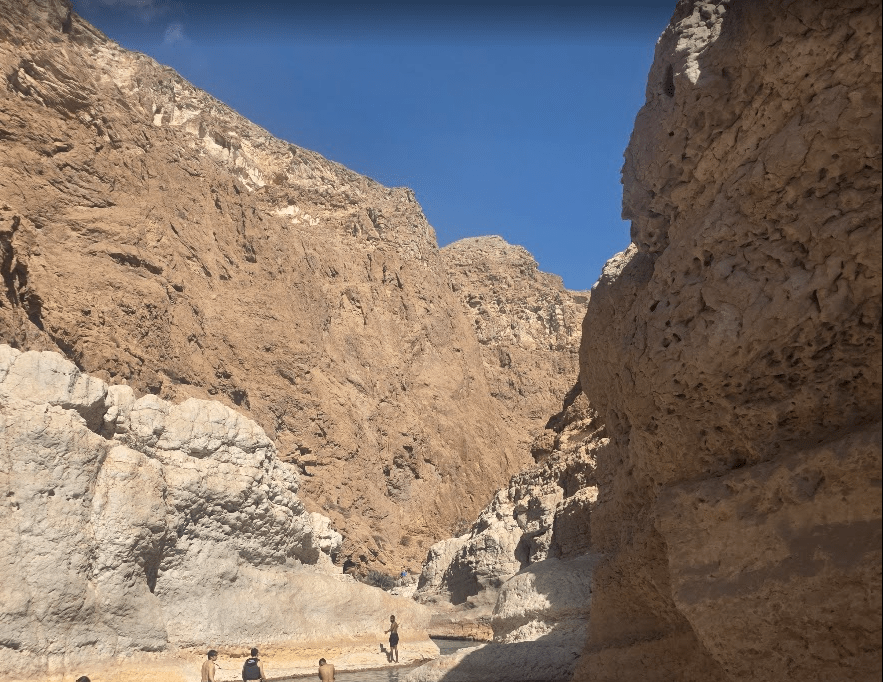
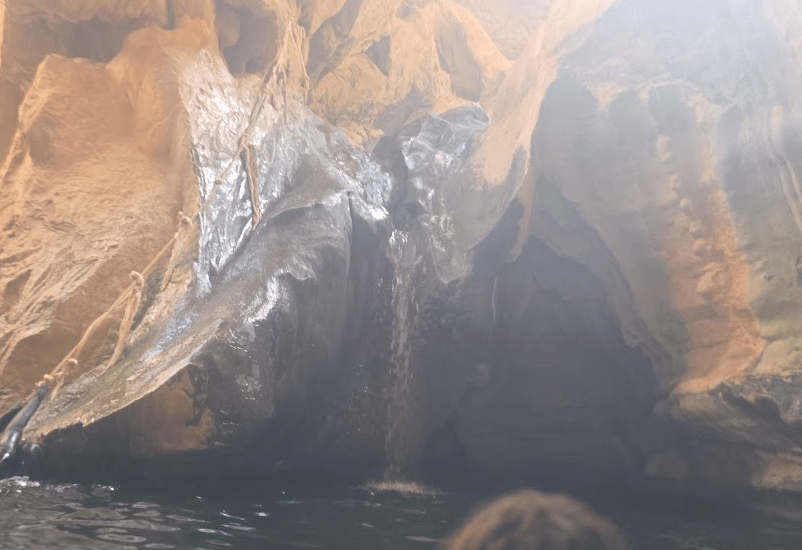
Later in the week I took another tour to Wadi Shab, where you swim or float down the Wadi, which is a stream bed that floods when in rains. At Wadi Shab you swim or float down the stream to a small cave with a water fall and rope swing inside. If you are a strong swimmer it should be no problem for you, but get the life jacket for your own safety. It costs 1 Omani rial, and the Wadi is beautiful. The tour also included a stop at Bimmah Sinkhole, which I found less interesting.
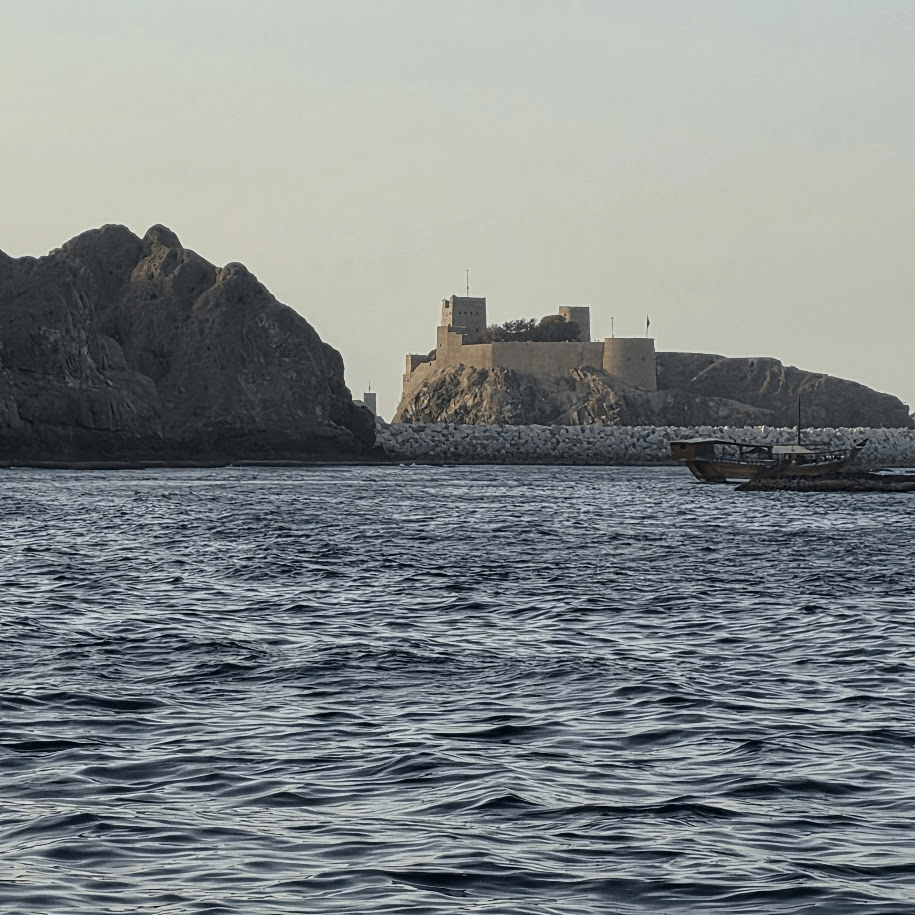
My final evening in Muscat, I took a cruise around Muscat Harbor and then started the trip home late that evening. Hopefully, relative peace and stability will return to this region before long.


Leave a Reply