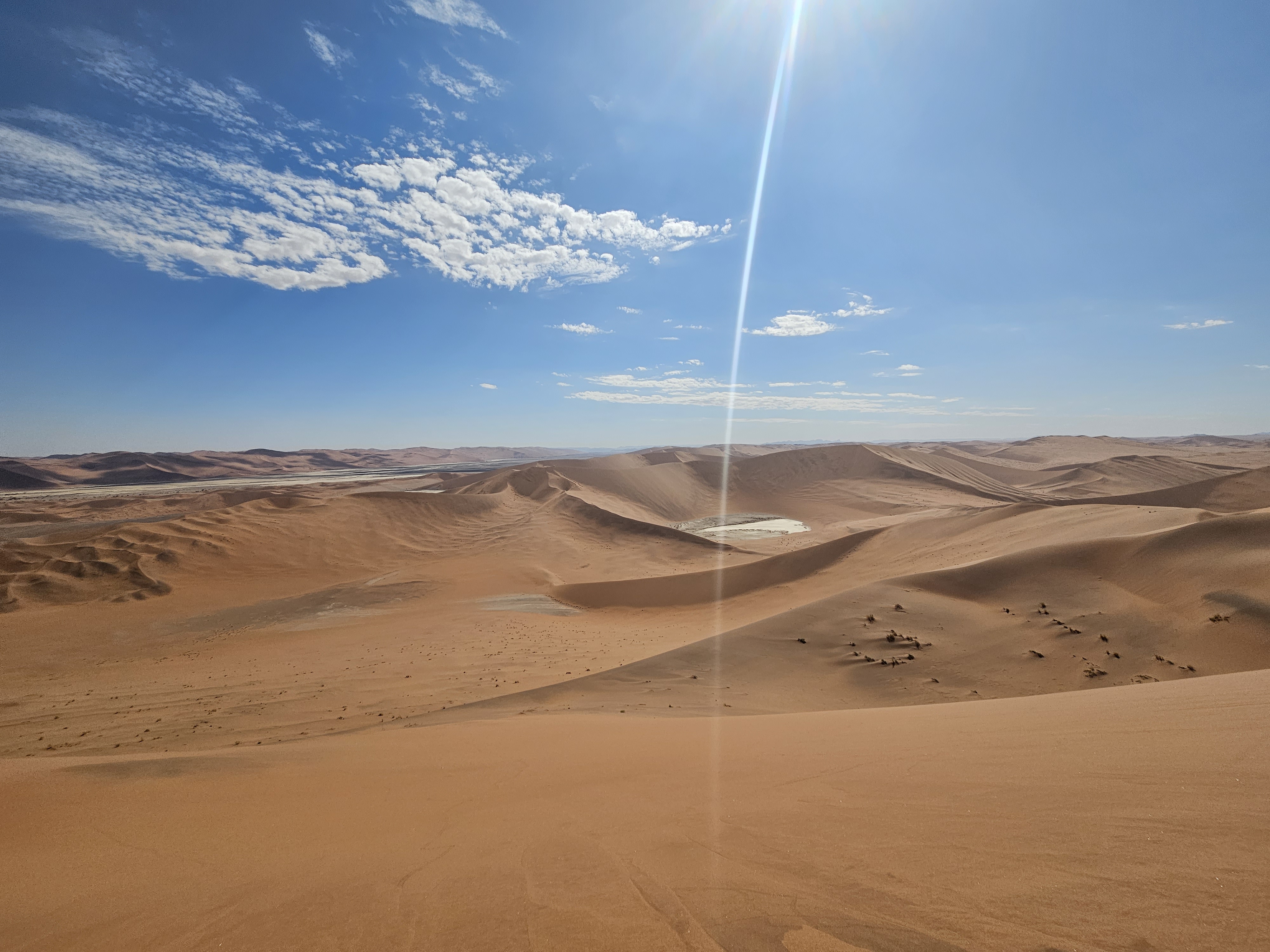
The Cowpasture and Jackson Rivers flow together near Iron Gate, Virginia to form the James River, which runs over 300 miles from Botetourt County to empty into the Chesapeake Bay. I started coming to the James River wanting to try my hand at a more exciting fishery than the Upper Roanoke River. I’ve never been excited about fishing for stocked trout or fishing in the crowds that flock to the Roanoke River in the spring perfectly synced with the Department of Fish and Wildlife’s published stocking schedule. And there are only so many panfish you need to reel in.
Even if you couldn’t care less about sticking a hook through the lip of anything swimming in the water and jerking it out for a photo op or dinner invitation, the scenery on the Upper James River is a beautiful sight. While the train tracks running along parts of the James will occasionally remind you that you are not far from civilization, and some of the boat launches on the James can get busy (the Springwood and Craig Creek boat launches comes to mind in particular), you can easily sustain the illusion of traveling through a secluded wilderness, even if it really only an illusion. In comparison, on the parts of the Roanoke River I am familiar with you are never more than a few yards from a greenway trail, road, or parking lot.

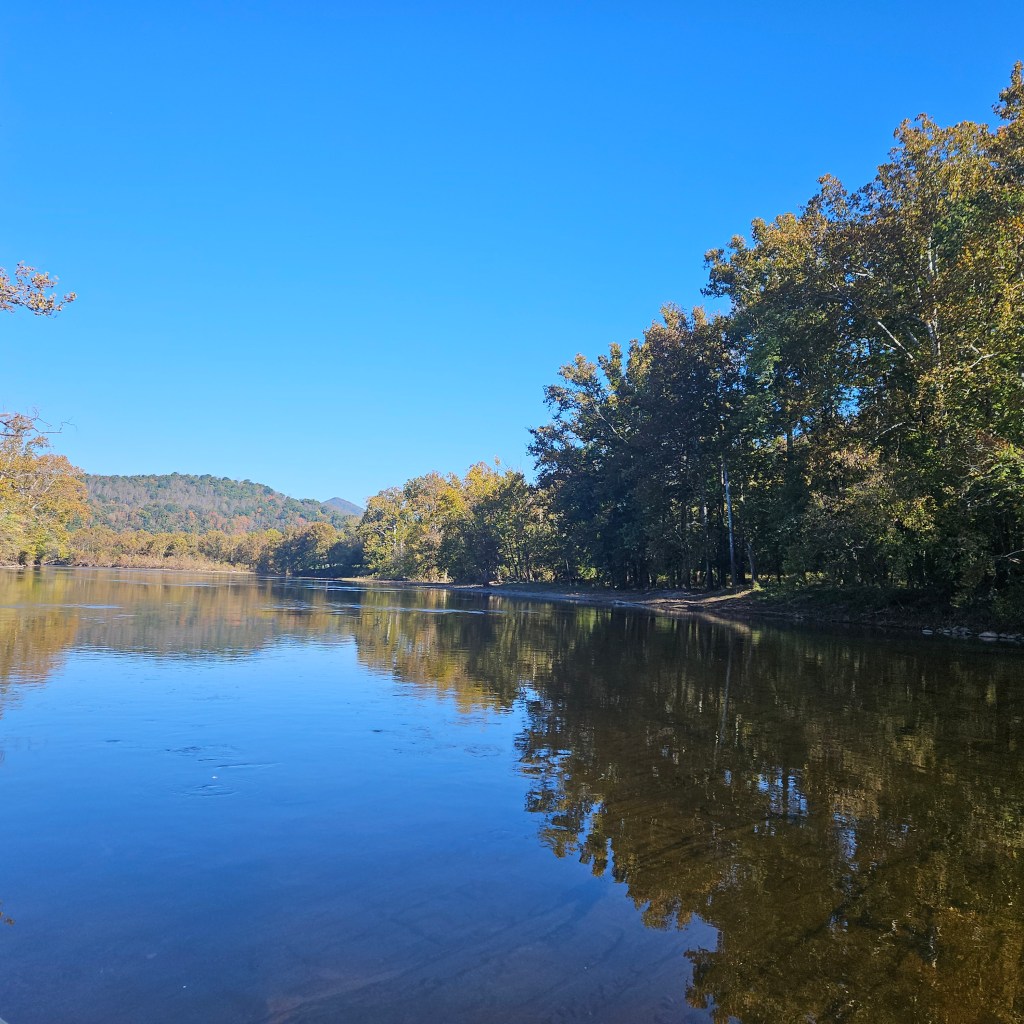
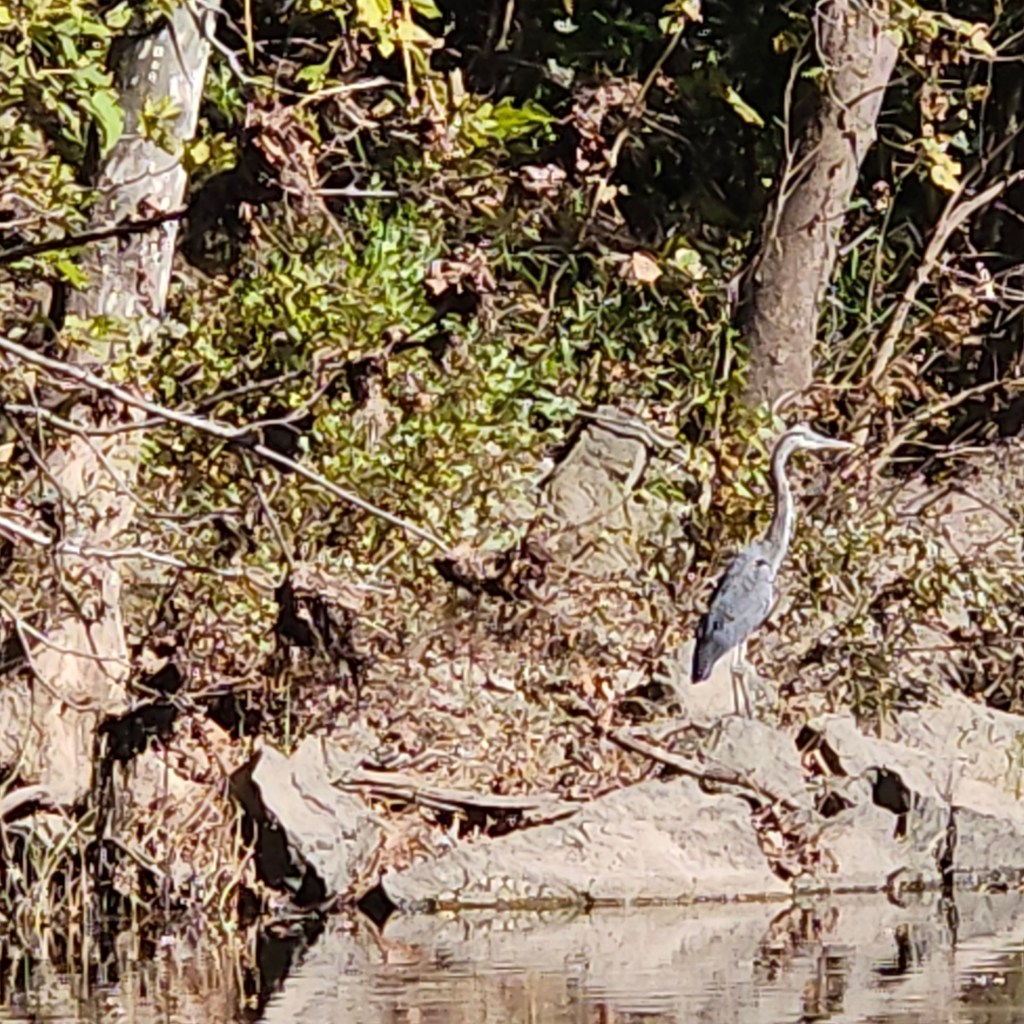
Even if the fishing is bad on a given day, chances are good you will see some wildlife.
The Great Blue Heron, seen below, is also common on the Roanoke River.
I’ve also seen mink making their way along the river bank, and a variety of birds I have yet to identify or get good pictures of.
But the main reason I go to the James River is to fish for muskellunge. Muskellunge are not native to Virginia and so all Muskellunge in the James and other Virginia waters are stocked fish. Nevertheless, they do well here. They are a larger relative of the northern pike, which is also not native to Virginia but has been introduced to selected waters. Looking somewhat like a toothy torpedo, nature has optimized them to be the apex predators of most waters they inhabit. Signs by boat launches advise anglers of the large size that muskellunge can grow to and warn of the importance of coming properly equipped with a stout net and other equipment for handling and releasing the fish. I have had other fisherman look at me like I was insane for wade-fishing in waters inhabited by muskellunge. While I have heard vague stories of muskellunge biting humans I’ve never considered the stories reliable enough to take seriously.
I caught my first muskellunge (and so far only) near the Craig Creek boat launch in September of 2024. I went to the boat launch feeling a bit pessimistic, as I had been after a muskie for over a year, and was skeptical that today would be the day. A light rain I was not expecting started, but there was no thunder and lightning so I decided to push on. The fishing did not go well to start with. I managed to put a bird’s nest in my baitcaster that I could not unknot, and so switched to the Daiwa Ninja telescoping spinning rod I frequently carry as a backup. The tip guide of the Daiwa rod got caught on something and broke off. This added a little additional discouragement, but finding that I could still cast effectively, I decided to continue following the wise advice of a fisherman I had once met on the water, that “you ain’t gonna catch ’em sitting at home.” I floated over a narrow area of the river around the boat launch casting around weed beds and fallen logs. Around 10 am I decided to let the kayak float down the river to the overpass visible from the boat launch and if I had caught nothing to paddle back and call it a day.
Just after I started this drift, I cast my Strike King crank bait down stream, and as I retrieved, I felt a catch and tug. The tug did not repeat, and I assumed it had just caught on a rock. I completed the retrieve and cast again.
I felt another tug that was almost certainly a fish, and then a release of the tension. Figuring the fish had not committed, I continued retrieving. And then what was left of the rod bent toward the water as the fish took the bait hard.
I was pretty sure from the get go that what was on my line was not a smallmouth as this fish had more fight and spirit that the smallmouths I had hooked on the James. I soon got a good look at the fish was elated to see that it was definitely a muskie.
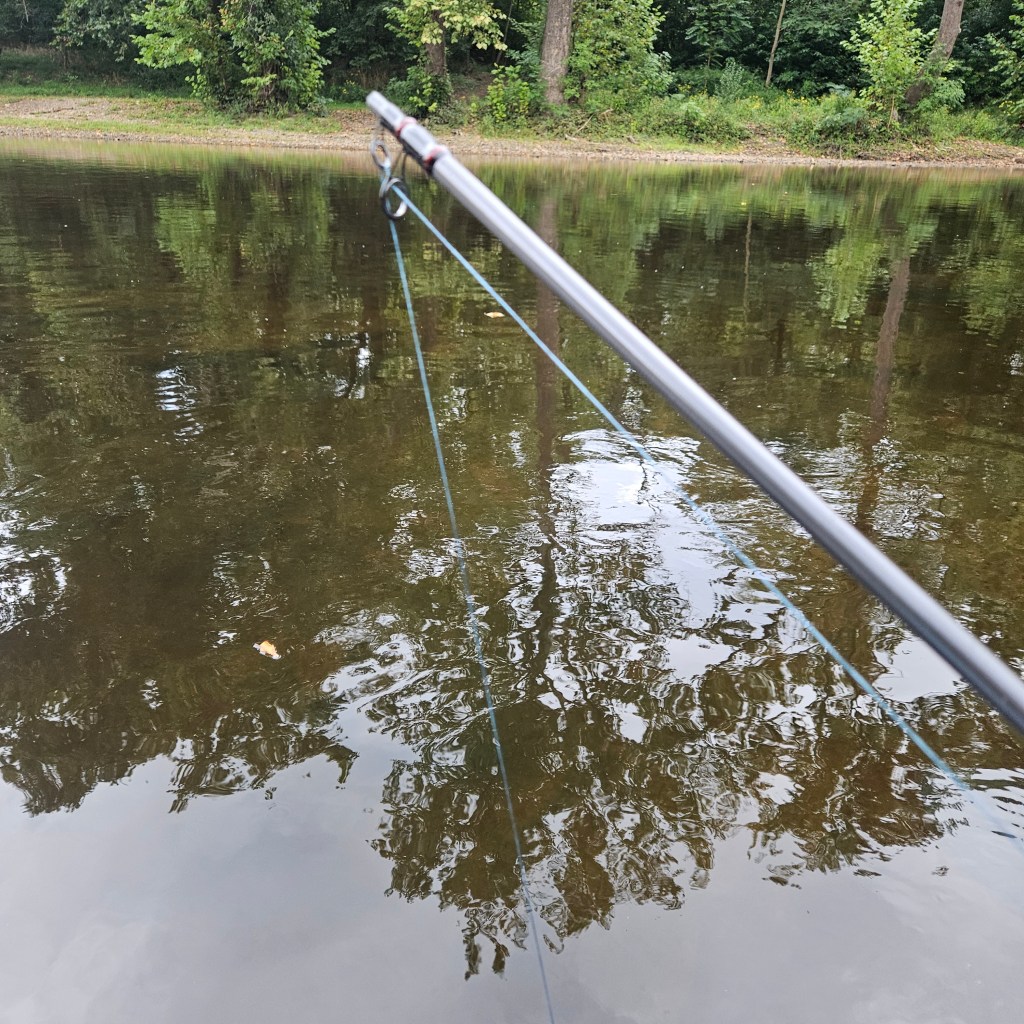
The fight was relatively quick and easy, no more than 2 or 3 minutes. Because I was using a 5000 series Daiwa reel and I think 80 pound test braided line, it was fairly easy to reel the fish to the kayak. That is when the challenge began, because in my excitement my senses had left me and I forgot I had a net. When trying bring the fish close enough to get it under control I lifted the rod tip too high, causing the rod to snap above the second guide.
A minute or two more of struggling with a very uncooperative fish and I was able to get it on the kayak and take a couple quick photographs.

I didn’t properly measure or weight it, but I would estimate the muskellunge at 24 – 30 inches in length. Nothing for the record books, but my first muskie and I think the largest fish I had ever caught out of freshwater.

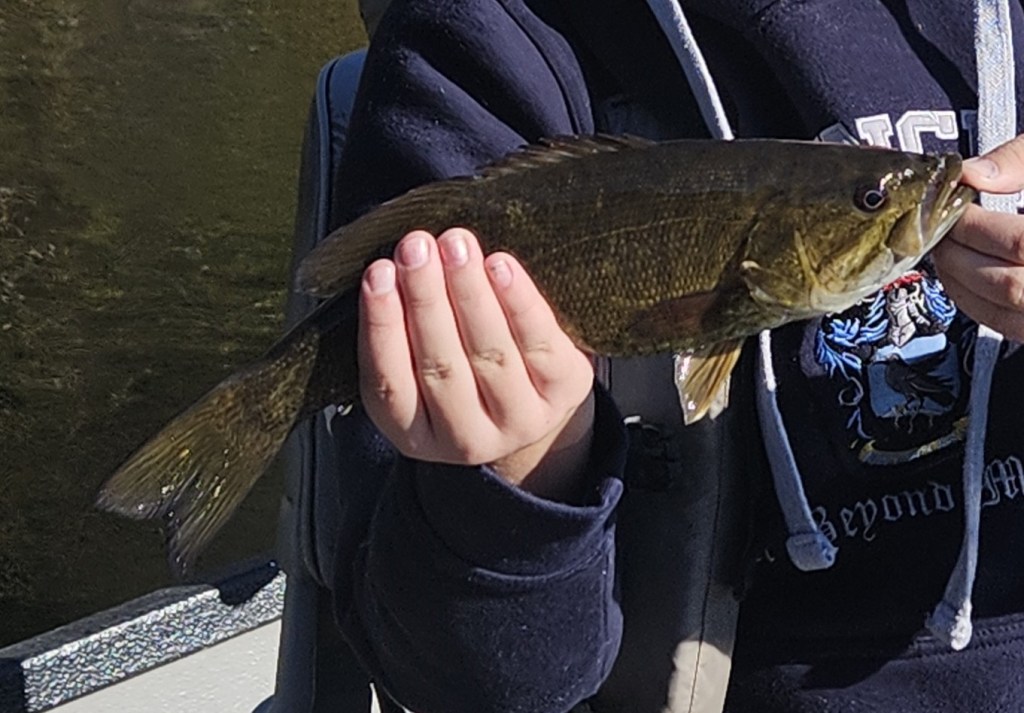
My daughter even got a bit excited about the idea of fishing when I showed her pictures of this fish, which was a first. When I scheduled a guided muskie fishing trip with Jay Waide from Roanoke Angler, she decided she wanted to come with me. We didn’t catch a muskie that day but we did see one probably upwards of 40 inches following inches behind my lure right up to the boat, and then making a couple lazy passes at it before losing interest and swimming off. Jay was a joy to fish with and I got some tips for the next time I am out fishing for muskie on my own. My daughter did catch a couple nice smallmouth bass with Jay’s help.
 World Wild Rover
Leave a comment